Sexual health is an essential part of overall physical and mental well-being. One topic that is often misunderstood is female squirting. Due to misinformation from adult content and lack of proper sex education, many women and couples have questions about whether squirting is normal or medically significant.
This article provides medically informed, educational, and stigma-free information to help improve sexual health awareness.
What is Female Squirting?
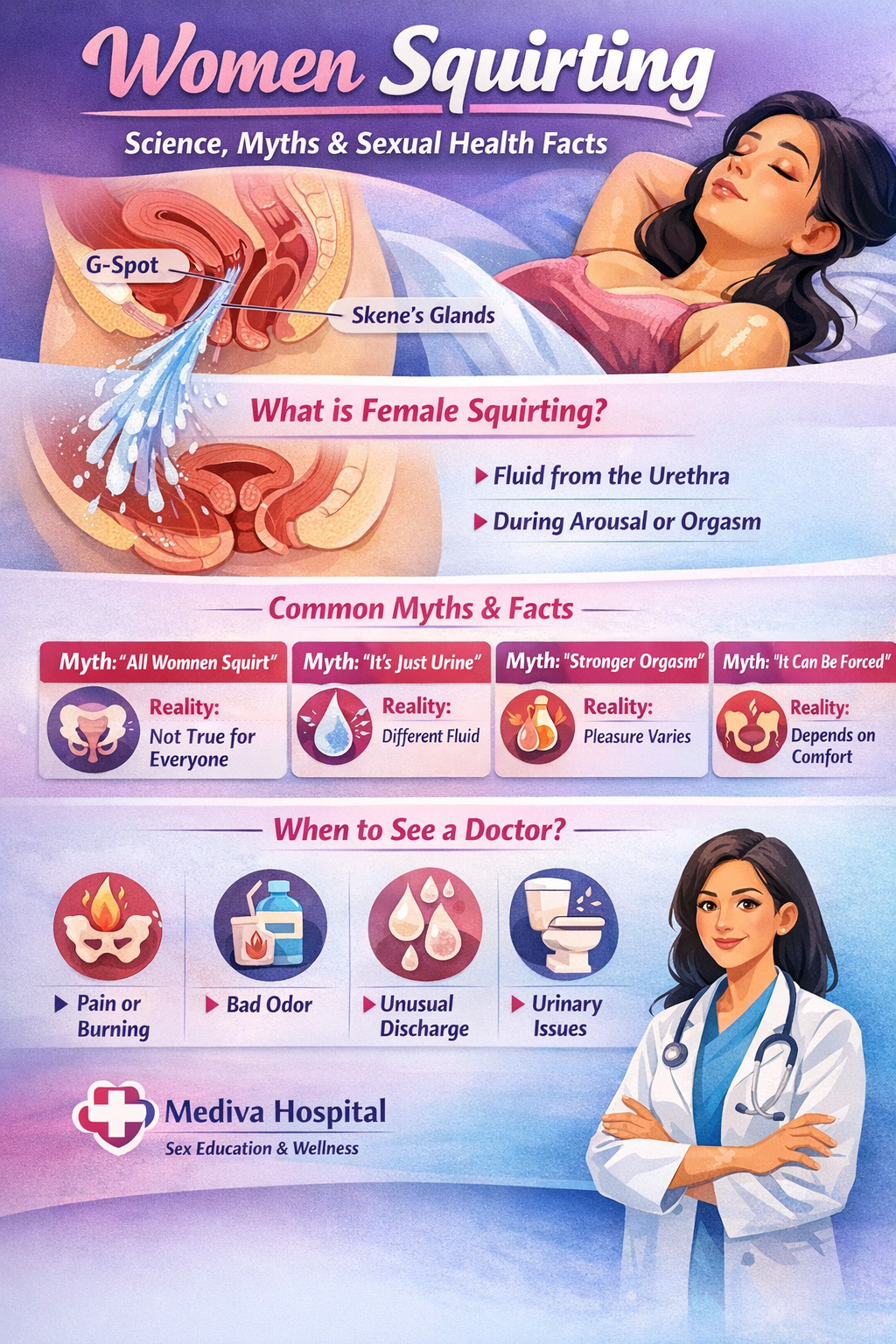
Female squirting is the release of fluid from the urethra during sexual arousal or orgasm in some women. It is different from vaginal lubrication and is usually linked with stimulation of the G-spot area.
Medical research suggests that the fluid may originate from glands near the urethra known as Skene’s glands, sometimes called the female prostate.
Is Female Squirting Normal?
Yes, squirting is normal — but it is not experienced by all women.
Important to understand:
- Some women squirt naturally
- Some women never experience it
- Both are completely normal and healthy
Squirting is not a measure of sexual performance, pleasure level, or fertility.
Female Ejaculation vs Squirting: What’s the Difference?
Many people confuse these two terms.
- Small amount of milky fluid
- Comes from Skene’s glands
Squirting:
- Larger amount of clear fluid
- Released through urethra during high arousal
Some women may experience both.
What is the Squirting Fluid Made Of?
Studies suggest the fluid may contain:
- Water
- Small amount of urea
- Creatinine
- Prostate-specific enzymes
It is not purely urine, although small traces may mix because the fluid exits through the urethra.
Common Myths About Women Squirting
Myth 1: Every woman should be able to squirt
Reality: Sexual response varies from person to person.
Myth 2: Squirting means better orgasm
Reality: Pleasure is subjective and differs in every individual.
Myth 3: Squirting is fake or always urine
Reality: Scientific studies show different fluid composition.
Myth 4: It can be forced
Reality: It depends on comfort, arousal, anatomy, and mental relaxation.
Factors That May Influence Squirting
Some biological and psychological factors include:
- G-spot stimulation
- Strong sexual arousal
- Emotional comfort with partner
- Pelvic floor muscle response
- Individual anatomy
Should Women Try to Achieve Squirting?
There is no medical requirement to achieve squirting. Healthy sexual life focuses on:
- Consent
- Comfort
- Communication
- Emotional connection
- Safety
Sexual wellness is different for every woman.
When Should You Consult a Doctor?
Seek medical advice if you experience:
- Fluid release without sexual arousal
- Burning sensation or pain
- Foul smell or unusual fluid color
- Urinary leakage issues
These may indicate infection or pelvic floor disorders.
Importance of Sexual Health Education
Proper sex education helps:
- Reduce fear and myths
- Improve relationship satisfaction
- Promote safe sexual practices
- Improve confidence and body awareness
Female squirting is a natural sexual response seen in some women. It is not necessary for sexual satisfaction and not a health indicator. Understanding your body and maintaining open communication with your partner and healthcare provider is key to sexual wellness.
